Sunday, December 3, 2017
Triffin, Tinbergen and Preventing the Next Global Financial Crisis
When Robert Triffin died I asked Jan Tinbergen if I could interview him about Triffin. As Tinbergen had much sympathy for Triffin and was on the Board of Advisors of FONDAD, he immediately sent me a postcard saying he was sad to hear about the death of Triffin and would be delighted to talk about him. He asked me to call him for an appointment.
I went to his home in The Hague, in Haviklaan, a rather modest house where he lived alone (his wife had died). I had been there before. In one of my visits I had proposed to arrange a taxi for him to facilitate his attendance to a FONDAD Conference at the Ministry of Foreign Affairs. "Thanks for the offer," he said, "but I prefer to go by tramway." And there he sat quietly at a table when I entered the conference room on the morning the conference started. I greeted him, we exchanged a few words and later, when I welcomed other participants, I pointed at the man with white hair sitting modestly and quietly at the table. "Is he really the great Jan Tinbergen?" asked one participant.
Tinbergen and I had a long conversation about Triffin and I incorporated part of what Tinbergen said in an article I wrote for the Duch newspaper NRC Handelsblad, "Robert Triffin, een bevlogen monetair genie" - Robert Triffin, a passionate monetary genius. Tinbergen reminded me of the key role he had given to Triffin in preparing the Report of the so-called RIO Group chaired by Tinbergen. He had asked Triffin to write the first technical report included in the report ("Reshaping the International Order") about the need to reform the international monetary system.
Triffin and the next global financial crisis
In that NRC Handelsblad article, I also included memories of Triffin's activities by Johannes Witteveen, Emile van Lennep and Tom de Vries, whom I had interviewed as well. The first two were also on the Advisory Board of FONDAD. Emile van Lennep's conclusion was: "In the long run, I always see a Triffin problem: how can one prevent international inflation or deflation."
Van Lennep's conclusion is shared by members of Robert Triffin International (RTI), a think group about the international financial system to which I also belong.
A FONDAD Group of 40 experts (FG40) is currently engaged in a discussion about how to prevent the next global financial crisis. I hope to inform you soon (within 3 months) about the outcome of that discussion.
Below is the first page of the article in NRC Handelsblad I wrote about Triffin in 1993. On the picture you see a meeting of the so-called Bellagio Group of academics and policymakers, which was similar to meetings organised by FONDAD. Emile van Lennep and Robert Triffin were key members of the Bellagio Group. I felt honoured and supported when both Triffin and Van Lennep (and others including Johannes Witteveen) helped me in making FONDAD a successful policy research centre and international forum for policy discussion. It was a pity that the Dutch Ministry of Foreign Affairs stopped providing core funding to FONDAD in 2007. However, thanks to the enthusiasm and free of fee cooperation by members of the FONDAD Network we are still active. I am very grateful for that cooperation and hope it will contribute to preventing a next global financial crisis.
Thursday, November 16, 2017
Emmanuel Macron discredits his European project
It is interesting and important to follow what is happening in France. It is important for Europe as a whole and, consequently, for the world as a whole as Europe still plays an important role in the world. Here an article that praises and criticizes Macron.
On ne peut donc que se féliciter que notre nouveau président veuille secouer le cocotier européen en sortant la France d’une posture geignarde et repliée sur elle-même. Le souci, c’est qu’il y a une contradiction profonde entre les objectifs qu’Emmanuel Macron affiche pour sa politique européenne et celle qu’il mène en France même. Du côté du marché du travail, il entend en effet se battre contre le dumping social, comme sur la question du travail détaché, où il a obtenu le mois dernier que l’Europe aille (un petit peu) plus loin que prévu dans la modification des règles le concernant. Mais dans le même temps, dans l’Hexagone, il pousse au contraire les feux pour faciliter les licenciements et faire baisser le coût du travail. Une logique déflationniste qui plombe l’économie de la zone euro depuis quinze ans et menace la survie de nos systèmes sociaux, nourrissant l’euroscepticisme.
De même sur le terrain fiscal, avec la quasi-disparition de l’ISF, la forte baisse de l’imposition des revenus du capital et celle de l’impôt sur les bénéfices des entreprises, sa politique française consiste à engager vigoureusement le pays dans la course au moins-disant fiscal, qui aggrave les déficits des Etats de l’Union et dévalorise le projet européen en le faisant apparaître comme un moyen privilégié de creuser les inégalités. Et cela au moment où les temps semblaient (enfin) mûrs pour que s’engage, à l’échelle de l’Europe, une dynamique inverse d’harmonisation et de lutte contre le dumping fiscal. Bref, il y a malheureusement lieu de redouter que la politique française d’Emmanuel Macron décrédibilise ses projets européens, tant auprès des Français que de nos voisins.
Article publié sur Alternatives économiques le 1er novembre 2017. Soutenez les!
Contradiction
Emmanuel Macron a décidé de mettre l’Europe tout en haut de son agenda. D’ici à un an, il veut avoir créé une Europe de la défense, développé une politique numérique européenne, intégré davantage la zone euro… Tout cela pour que l’Europe protège mieux ses citoyens et cesse enfin d’être seulement cette Europe-marché sans âme qui a fait de la concurrence de tous contre tous sa principale raison d’être. Fort bien. C’était en effet un des principaux reproches qu’on pouvait adresser à François Hollande que d’avoir renoncé à toute ambition dans ce domaine.On ne peut donc que se féliciter que notre nouveau président veuille secouer le cocotier européen en sortant la France d’une posture geignarde et repliée sur elle-même. Le souci, c’est qu’il y a une contradiction profonde entre les objectifs qu’Emmanuel Macron affiche pour sa politique européenne et celle qu’il mène en France même. Du côté du marché du travail, il entend en effet se battre contre le dumping social, comme sur la question du travail détaché, où il a obtenu le mois dernier que l’Europe aille (un petit peu) plus loin que prévu dans la modification des règles le concernant. Mais dans le même temps, dans l’Hexagone, il pousse au contraire les feux pour faciliter les licenciements et faire baisser le coût du travail. Une logique déflationniste qui plombe l’économie de la zone euro depuis quinze ans et menace la survie de nos systèmes sociaux, nourrissant l’euroscepticisme.
De même sur le terrain fiscal, avec la quasi-disparition de l’ISF, la forte baisse de l’imposition des revenus du capital et celle de l’impôt sur les bénéfices des entreprises, sa politique française consiste à engager vigoureusement le pays dans la course au moins-disant fiscal, qui aggrave les déficits des Etats de l’Union et dévalorise le projet européen en le faisant apparaître comme un moyen privilégié de creuser les inégalités. Et cela au moment où les temps semblaient (enfin) mûrs pour que s’engage, à l’échelle de l’Europe, une dynamique inverse d’harmonisation et de lutte contre le dumping fiscal. Bref, il y a malheureusement lieu de redouter que la politique française d’Emmanuel Macron décrédibilise ses projets européens, tant auprès des Français que de nos voisins.
Article publié sur Alternatives économiques le 1er novembre 2017. Soutenez les!
Saturday, November 11, 2017
Jean-Claude Trichet and others on the danger of a new, dramatic global crisis
![]() |
| Jean-Claude Trichet |
I sent the interview with Trichet to a Fondad Group of forty international experts on the global financial system (FG40) asking them for more in-depth analysis of the problem, and their view on how to improve the global financial system and prevent the emergence of a new, dramatic global crisis.
![]() |
| Robert Aliber |
Christian Ghymers commented a few hours later: "As you know, we share Trichet's view and see also the next big(gest) crisis around the corner - and this time without rooms for manœuvre - except if the SDR could be effectively mobilized and transformed rapidly along the lines we try to push with Triffin Foundation (RTI) and our publications and interventions, in particular at the G20 Ministerial last year (see my PowerPoints attached) and in other joined short publications."
![]() |
| Christian Ghymers |
![]() |
| Andrew Sheng |
In a next post, I will highlight the views from the FG40 on how to prevent the emergence of a new, dramatic global crisis.
Memory, music and pleasure
Last night, driving back home from Groningen, I told my wife (Aafke Steenhuis) that my memory capacity is now better than when I was young, because I trained it in my work as a researcher, journalist and activist in the seventies and eighties, and as the director of FONDAD from 1987 until now.
After having moved the FONDAD office from The Hague to Amsterdam (in 2008) I trained my memory capacity even more during my morning walks to Schellingwoude Locks. In those walks, ideas sprang up that I tried to remember by memorizing the first word or phrase.
I continue to challenge my memory capacity when ideas come up in bed at night or in the early morning hours when I am writing about an idea and do not make a note of the other ideas that have sprung up. I try to memorize them and if I can not remember them later ... I treat them as unimportant ideas.
It's more than a trick. It is a pleasure.
PS: My father's band from the 1930s (he was about 20 years old) was called "Herman Tennyson and His Pleasure Providers". There is an old gramophone record (78 laps) of his band in which they play two pieces, "Tango des Roses" and "Marêva". Clicking on the link below you can hear the music of "Marêva" played by my father's band in the 1930s. My father plays the trumpet.
Tunquén and my father's band
Friday, October 20, 2017
Reconquer democracy at the national level to combat international neoliberalism
I have just read an interesting article on neoliberalism in Europe that
calls for restoring or regaining democratic debate at the national
level in European countries. I will cite paragraphs from the article,
written by William Mitchell and Thomas Fazi, which came out today in
Social Europe: "Everything You Know About Neoliberalism Is Wrong." Although I do not like the title of the article, I like the text.
"Even though neoliberalism as an ideology springs from a desire to curtail the state’s role, neoliberalism as a political-economic reality has produced increasingly powerful, interventionist and ever-reaching – even authoritarian – state apparatuses.
The process of neoliberalisation has entailed extensive and permanent state intervention, including: the liberalisation of goods and capital markets; the privatisation of resources and social services; the deregulation of business, and financial markets in particular; the reduction of workers’ rights (first and foremost, the right to collective bargaining) and more in general the repression of labour activism; the lowering of taxes on wealth and capital, at the expense of the middle and working classes; the slashing of social programmes, and so on. These policies were systemically pursued throughout the West (and imposed on developing countries) with unprecedented determination, and with the support of all the major international institutions and political parties.
(...) Conventional wisdom holds that globalisation and the internationalisation of finance have ended the era of nation states and their capacity to pursue policies not in accord with the diktats of global capital. But does the evidence support the assertion that national sovereignty has truly reached the end of its days? (...)
More in general, as we explain in our new book Reclaiming the State: A Progressive Vision of Sovereignty for a Post- Neoliberal World, globalisation, even in its neoliberal form, was (is) not the result of some intrinsic capitalist or technology-driven dynamic that inevitably entails a reduction of state power, as is often claimed. On the contrary, it was (is) a process that was (is) actively shaped and promoted by states. All the elements that we associate with neoliberal globalisation – delocalisation, deindustrialisation, the free movement of goods and capital, etc. – were (are), in most cases, the result of choices made by governments.
(...) [there was] a deliberate and conscious limitation of state sovereign rights by national elites, through a process known as depoliticisation. The various policies adopted by Western governments to this end include: (i) reducing the power of parliaments vis-à-vis that of the executive and making the former increasingly less representative (for instance by moving from proportional parliamentary systems to majoritarian ones); (ii) making central banks formally independent of governments; (iii) adopting ‘inflation targeting’ – an approach which stresses low inflation as the primary objective of monetary policy, to the exclusion of other policy objectives, such as full employment – as the dominant approach to central bank policymaking; (iv) adopting rules-bound policies – on public spending, debt as a proportion of GDP, competition, etc. – thereby limiting what politicians can do at the behest of their electorates; (v) subordinating spending departments to treasury control; (vi) re-adopting fixed exchange rates systems, such as the euro, which severely limit the ability of governments to exercise control over economic policy; (vii) limiting the capacity of governments to regulate in the public interest, by means of so-called ISDS (investor-state dispute settlement) mechanisms, nowadays included in most bilateral investment treaties (of which there are more than 4,000 in operation) and regional trade agreements (such as the FTAA and TPP); and, most importantly perhaps, (viii) surrendering national prerogatives to supranational institutions and super-state bureaucracies such as the EU.
(...) the creation of self-imposed ‘external constraints’ allowed national politicians to reduce the political costs of the neoliberal transition – which clearly involved unpopular policies – by ‘scapegoating’ institutionalised rules and ‘independent’ or international institutions, which in turn were presented as an inevitable outcome of the new, harsh realities of globalisation, thus insulating macroeconomic policies from popular contestation. The war on sovereignty has been in essence a war on democracy. This process was brought to its most extreme conclusions in Western Europe, where the Maastricht Treaty (1992) embedded neoliberalism into the EU’s very fabric, effectively outlawing the ‘Keynesian’ polices that had been commonplace in the previous decades.
(...) for more democratic control over politics (and particularly over the destructive global flows unleashed by neoliberalism), which necessarily can only be exercised at the national level, in the absence of effective supranational mechanisms of representation. The EU is obviously no exception: in fact, it is (correctly) seen by many as the embodiment of technocratic rule and elite estrangement from the masses, as demonstrated by the Brexit vote and the widespread euroscepticism engulfing the continent. In this sense, as we argue in the book, leftists should not see Brexit – and more in general the current crisis of the EU and monetary union – as a cause for despair, but rather as a unique opportunity to embrace (once again) a progressive, emancipatory vision of national sovereignty, to reject the EU’s neoliberal straitjacket and to implement a true democratic-socialist platform (which would be impossible within the EU, let alone within the eurozone). To do this, however, they must come to terms with the fact that the sovereign state, far from being helpless, still contains the resources for democratic control of a nation’s economy and finances – that the struggle for national sovereignty is ultimately a struggle for democracy. This needn’t come at the expense of European cooperation. On the contrary, by allowing governments to maximise the well-being of their citizens, it could and should provide the basis for a renewed European project, based on multilateral cooperation between sovereign states.
William
Mitchell and Thomas Fazi are the authors of Reclaiming the State: A Progressive Vision of Sovereignty for a Post- Neoliberal World, which
has just been published by Pluto Press.
![]() |
| Thomas Fazi |
The process of neoliberalisation has entailed extensive and permanent state intervention, including: the liberalisation of goods and capital markets; the privatisation of resources and social services; the deregulation of business, and financial markets in particular; the reduction of workers’ rights (first and foremost, the right to collective bargaining) and more in general the repression of labour activism; the lowering of taxes on wealth and capital, at the expense of the middle and working classes; the slashing of social programmes, and so on. These policies were systemically pursued throughout the West (and imposed on developing countries) with unprecedented determination, and with the support of all the major international institutions and political parties.
(...) Conventional wisdom holds that globalisation and the internationalisation of finance have ended the era of nation states and their capacity to pursue policies not in accord with the diktats of global capital. But does the evidence support the assertion that national sovereignty has truly reached the end of its days? (...)
More in general, as we explain in our new book Reclaiming the State: A Progressive Vision of Sovereignty for a Post- Neoliberal World, globalisation, even in its neoliberal form, was (is) not the result of some intrinsic capitalist or technology-driven dynamic that inevitably entails a reduction of state power, as is often claimed. On the contrary, it was (is) a process that was (is) actively shaped and promoted by states. All the elements that we associate with neoliberal globalisation – delocalisation, deindustrialisation, the free movement of goods and capital, etc. – were (are), in most cases, the result of choices made by governments.
(...) [there was] a deliberate and conscious limitation of state sovereign rights by national elites, through a process known as depoliticisation. The various policies adopted by Western governments to this end include: (i) reducing the power of parliaments vis-à-vis that of the executive and making the former increasingly less representative (for instance by moving from proportional parliamentary systems to majoritarian ones); (ii) making central banks formally independent of governments; (iii) adopting ‘inflation targeting’ – an approach which stresses low inflation as the primary objective of monetary policy, to the exclusion of other policy objectives, such as full employment – as the dominant approach to central bank policymaking; (iv) adopting rules-bound policies – on public spending, debt as a proportion of GDP, competition, etc. – thereby limiting what politicians can do at the behest of their electorates; (v) subordinating spending departments to treasury control; (vi) re-adopting fixed exchange rates systems, such as the euro, which severely limit the ability of governments to exercise control over economic policy; (vii) limiting the capacity of governments to regulate in the public interest, by means of so-called ISDS (investor-state dispute settlement) mechanisms, nowadays included in most bilateral investment treaties (of which there are more than 4,000 in operation) and regional trade agreements (such as the FTAA and TPP); and, most importantly perhaps, (viii) surrendering national prerogatives to supranational institutions and super-state bureaucracies such as the EU.
(...) the creation of self-imposed ‘external constraints’ allowed national politicians to reduce the political costs of the neoliberal transition – which clearly involved unpopular policies – by ‘scapegoating’ institutionalised rules and ‘independent’ or international institutions, which in turn were presented as an inevitable outcome of the new, harsh realities of globalisation, thus insulating macroeconomic policies from popular contestation. The war on sovereignty has been in essence a war on democracy. This process was brought to its most extreme conclusions in Western Europe, where the Maastricht Treaty (1992) embedded neoliberalism into the EU’s very fabric, effectively outlawing the ‘Keynesian’ polices that had been commonplace in the previous decades.
(...) for more democratic control over politics (and particularly over the destructive global flows unleashed by neoliberalism), which necessarily can only be exercised at the national level, in the absence of effective supranational mechanisms of representation. The EU is obviously no exception: in fact, it is (correctly) seen by many as the embodiment of technocratic rule and elite estrangement from the masses, as demonstrated by the Brexit vote and the widespread euroscepticism engulfing the continent. In this sense, as we argue in the book, leftists should not see Brexit – and more in general the current crisis of the EU and monetary union – as a cause for despair, but rather as a unique opportunity to embrace (once again) a progressive, emancipatory vision of national sovereignty, to reject the EU’s neoliberal straitjacket and to implement a true democratic-socialist platform (which would be impossible within the EU, let alone within the eurozone). To do this, however, they must come to terms with the fact that the sovereign state, far from being helpless, still contains the resources for democratic control of a nation’s economy and finances – that the struggle for national sovereignty is ultimately a struggle for democracy. This needn’t come at the expense of European cooperation. On the contrary, by allowing governments to maximise the well-being of their citizens, it could and should provide the basis for a renewed European project, based on multilateral cooperation between sovereign states.
About William Mitchell and Thomas Fazi
![]() |
| William Mitchell |
Wednesday, October 4, 2017
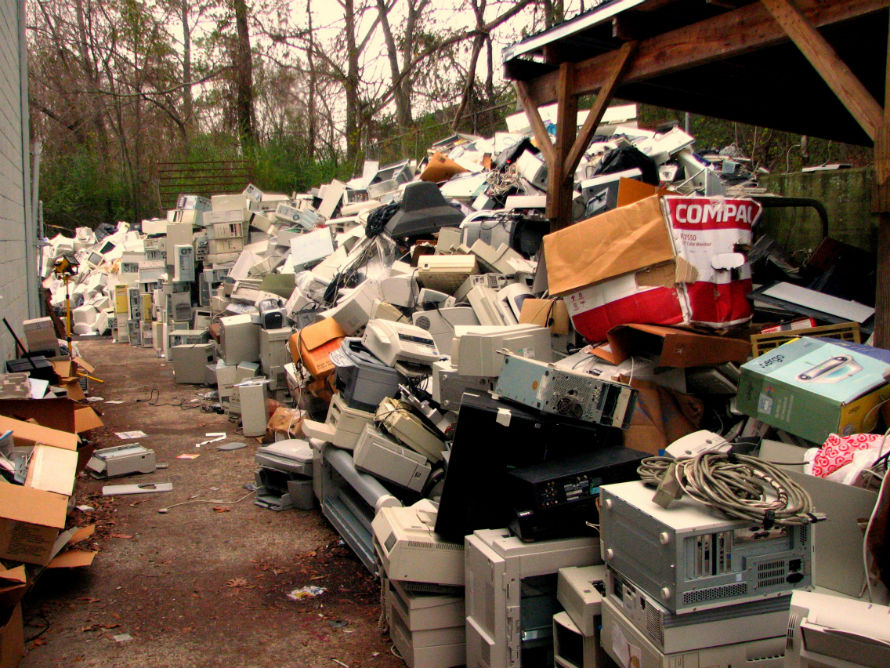
Electronic waste from the first world contaminates the blood of Africans
That our electronic waste contaminates the blood of poor Africans is a scandal. Here is an article about it, published on 21 September 2017 by Residuos Profesional and based on research by Universidad de Las Palmas de Gran Canaria (ULPGC) and the Hospital Insular, "Residuos electrónicos del primer mundo contaminan la sangre de los africano".

El trabajo apoya esa afirmación en varios datos estadísticos: los 16 países examinados están entre los más pobres del mundo, pero las concentraciones de esos metales son más altas entre los inmigrantes procedentes de naciones con más PIB, con más teléfonos por 100 habitantes, con más usuarios de internet y, sobre todo, con mayor volumen de importación de dispositivos electrónicos de segunda mano.
Por todo ello recomiendan hacer un mayor seguimiento de este tipo de contaminantes, porque “algunos de esos elementos comportan un enorme riesgo, sobre todo para los niños”, y porque “es bien sabido que la polución no respeta fronteras, así que el manejo inadecuado de esos los residuos tecnológicos en esos países puede producir un aumento generalizado de la presencia mundial de esos contaminantes”.
Fuente:
Efeverde
La sangre de los inmigrantes africanos que llegan a Canarias, con independencia de su país de origen, está contaminada por vanadio a niveles desconocidos en occidente y también por trazas de cobalto, arsénico, níquel… Es rastro de la basura tecnológica que el primer mundo envía a África.

(...)
Basura tecnológica
Los firmantes del artículo no tienen dudas respecto a qué se debe todo ello: se calcula, dicen, que el 80 % de la “basura tecnológica” genera el primer mundo se envía a África, tanto para abastecer el comercio de estos productos con modelos de segunda mano, muchas veces obsoletos y de vida muy corta, como para nutrir cadenas de reciclaje “informales” (eufemismo de insalubres o ilegales).El trabajo apoya esa afirmación en varios datos estadísticos: los 16 países examinados están entre los más pobres del mundo, pero las concentraciones de esos metales son más altas entre los inmigrantes procedentes de naciones con más PIB, con más teléfonos por 100 habitantes, con más usuarios de internet y, sobre todo, con mayor volumen de importación de dispositivos electrónicos de segunda mano.
Un ciudadano, un móvil
Los autores remarcan otro hecho: África puede estar atrasada respecto al resto del mundo en líneas telefónicas fijas, pero el uso del móvil se ha disparado en sus países en los últimos años, tanto las ciudades como las zonas rurales, hasta el punto de que muchos estados han alcanzado el paradigma de “un ciudadano, un móvil”. Eso sí, el 97 % de los móviles del continente son de segunda mano.Por todo ello recomiendan hacer un mayor seguimiento de este tipo de contaminantes, porque “algunos de esos elementos comportan un enorme riesgo, sobre todo para los niños”, y porque “es bien sabido que la polución no respeta fronteras, así que el manejo inadecuado de esos los residuos tecnológicos en esos países puede producir un aumento generalizado de la presencia mundial de esos contaminantes”.
Fuente:
Efeverde
Wednesday, September 27, 2017
Secret EU memorandum on the privatisation of water in Greece
![]() |
| Painting of Thessaloniki by Aafke Steenhuis |
Leaked EU Memorandum Reveals Renewed Attempt at Imposing Water Privatization on Greece
Tuesday, August 25, 2015 By Satoko Kishimoto and Olivier Hoedeman, Corporate Europe Observatory | News AnalysisThe requirement to sell off €50 billion in public assets is one of the most controversial aspects of the 'agreement' that Eurozone countries and the Troika forced on the Greek government during mid-July's "night of shame".
Details of exactly what Greece is required to privatise have now emerged with the leaking of the "Memorandum of Understanding for a three-year ESM programme" prepared by the Troika's International Monetary Fund, European Commission and European Central Bank. [1] The leaked document lists 23 state assets, ranging from airports to service utilities, and presents precise steps and timelines for privatisation.
It comes as a shock that this list includes two large public water companies: Athens Water Supply & Sewerage S.A (EYDAP) and Thessaloniki Water Supply & Sewerage S.A. (EYATH), which provide drinking water for the country's two biggest cities. The Troika had insisted on water privatisation in an earlier memorandum, but strong public opposition had blocked this proposal.
In June 2014 the Council of State, the country's highest administrative court, ruled that transferring a controlling stake in Athens' public water utility EYDAP to private hands was unconstitutional because of the responsibility of the state to protect citizens' fundamental right to health. [2] The new Memorandum foresees the sale of 11% of EYDAP shares, which seems minimal at face value, but given that 38.7% of EYDAP's shares are already owned by private companies and individuals, it would leave 49.7% of the utility in private hands.
As for Thessaloniki, a non-binding referendum was held in May 2014, resulting in a 98% vote against water privatisation. This citizen-led initiative mobilised 218,002 voters and sent a crystal clear message rejecting the planned sale of 51% of EYATH shares to private investors (French water multinational Suez and Israel's state-owned Merokot had shown interest). The leaked Memorandum now orders the liquidation of 23% of state-owned shares; knowing that another 26% are already in private hands, this would make the company 49% private.
- to read further click HERE
Subscribe to:
Posts (Atom)